
Insights — Business — 03 Oct 2026 — 4 min read
Morocco's World Cup summer, and what brands can learn from it.
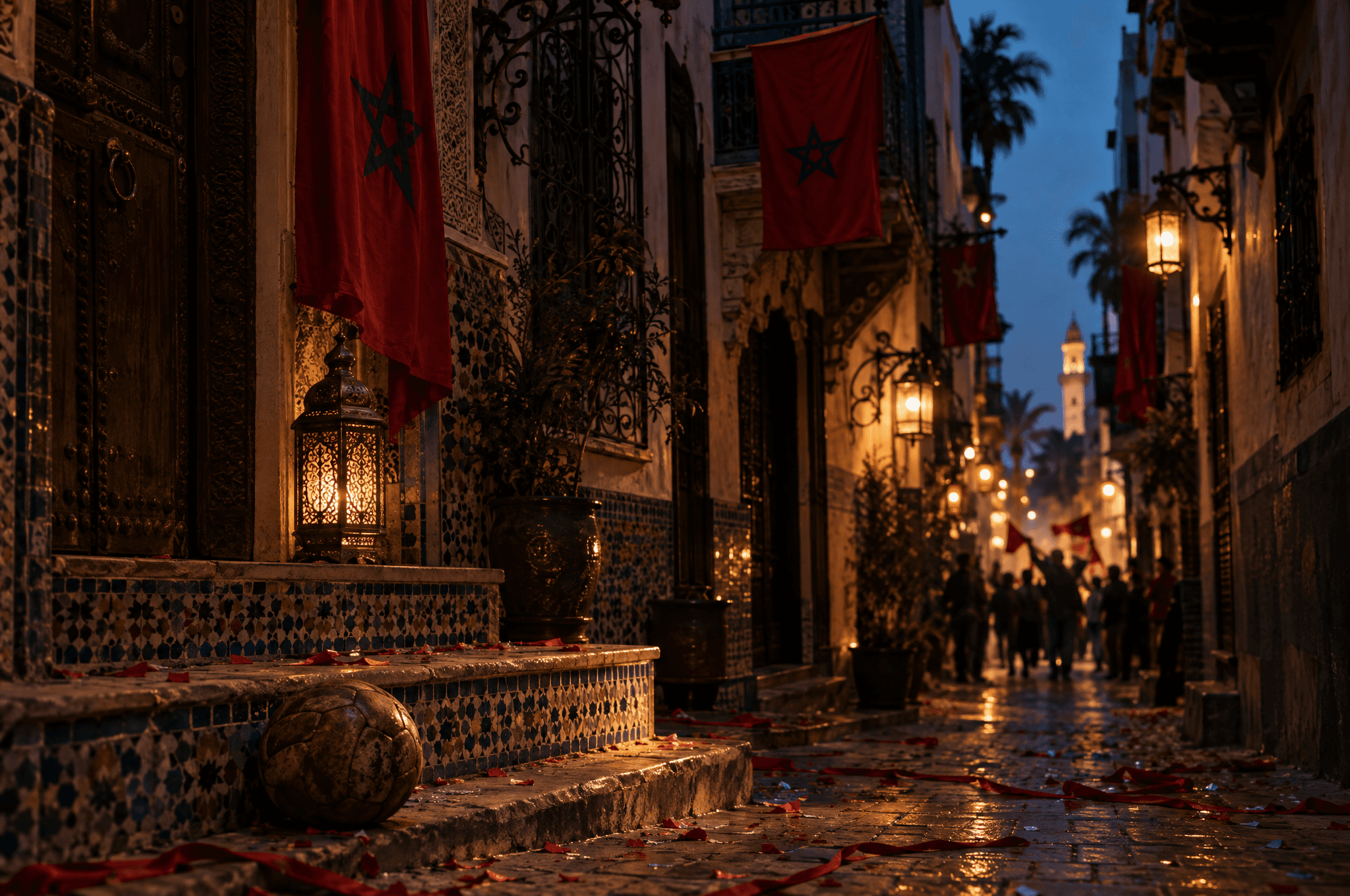
The Atlas Lions reached the quarter-finals again in 2026. For a few weeks the world's attention turned to Morocco, and the brands that were ready online kept some of it.
Morocco's 2026 World Cup started long before the tournament: the Atlas Lions were the first African team to qualify. In North America they confirmed that their 2022 semi-final was no accident. After the group stage they beat Canada 3–0 in the round of 16, before France ended the run with a 2–0 win in the quarter-final on 9 July.
Two deep runs in a row change how a country is seen. Morocco is no longer the surprise story. It is a football nation with a style, a following, and a host's role ahead in 2030.
Attention is a window, not a gift
During a tournament, curiosity spills far beyond football. People look up the cities they saw on screen, the food, the hotels, the shops, the designers. That curiosity is brief. It lands on whatever is easiest to find, and leaves just as fast if the first page is slow, untranslated or out of date.
- A site that loads fast on a phone, even on a crowded network.
- Content in the languages of the people looking: Arabic, French, English, Spanish.
- A clear next step on every page: WhatsApp, booking or an enquiry form.
- Photography and words that feel specific to Morocco, not borrowed from a template.
Play like the team
What made the Atlas Lions compelling was not luck. It was a defined identity, a disciplined structure and the confidence to execute it against anyone. A brand's website works the same way: one clear idea, a structure that holds under pressure, and the details done properly.
Moments of national attention reward the brands that prepared before the whistle.
The next moment is already on the calendar. In 2030, Morocco co-hosts the World Cup with Spain and Portugal. The brands that start building now won't have to rush when the world comes back.
Working on something ambitious?
Start a project →